Committee addresses SANDF powers of arrests and use of private security companies
· Citizen
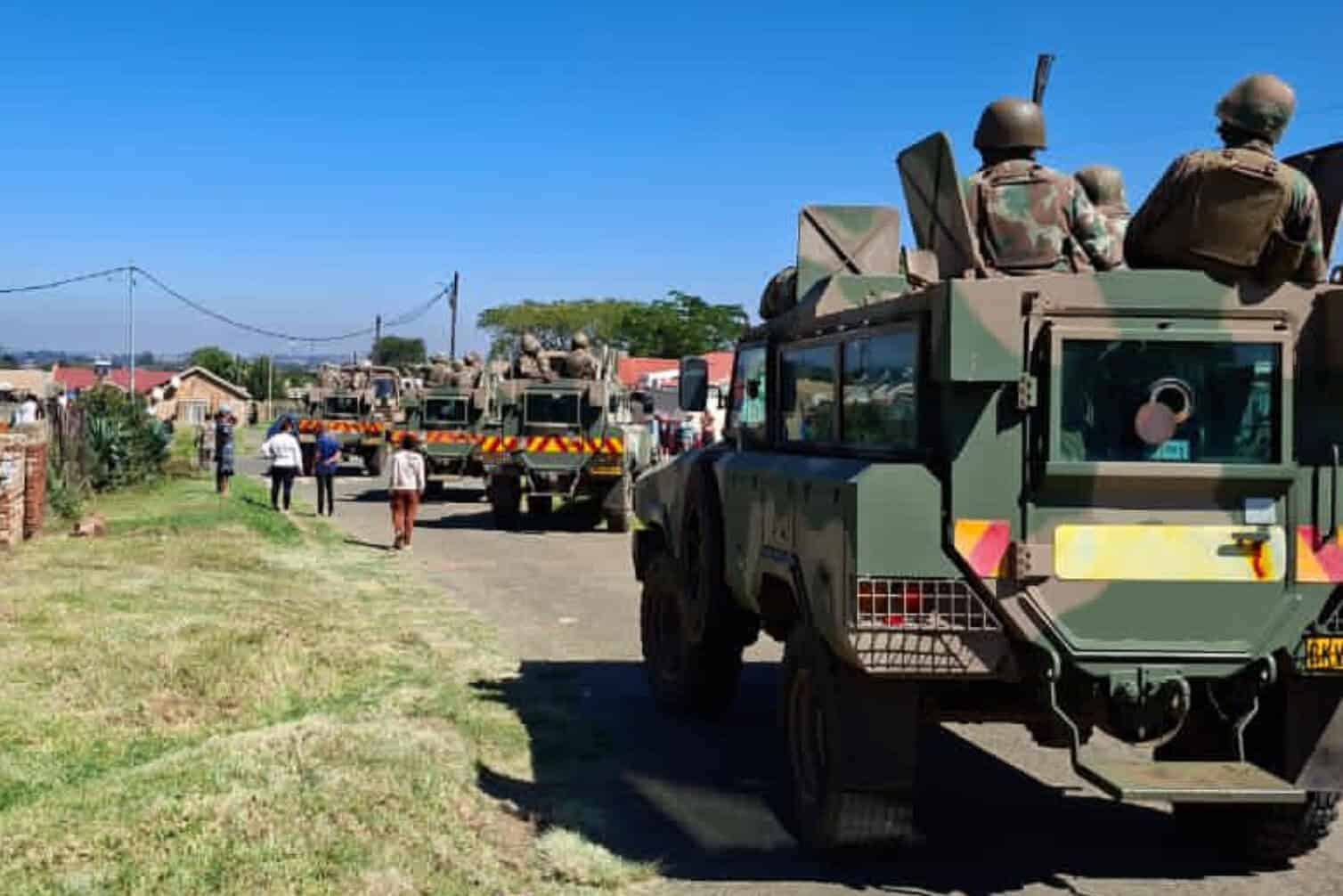
Senior members of the South African Police Force (Saps) and South African National Defence Force (SANDF) deployed to stabilise crime in the country are ironing out the operational kinks.
The Joint Standing Committee on Defence and Police met on Friday to receive a presentation by senior Saps and SANDF officials over the progress of Operation Prosper.
Visit somethingsdifferent.biz for more information.
Committee members still sought clarification on operational matters relating to arrest procedures, private security involvement and the tracking of operational resources.
Defence minister Angie Motshekga stated that two organisations had been meeting regularly, and welcomed questions on what success looked like.
“One question that for me really that really kept on coming that is very helpful is the exit plan. What is objective as defence [sic]?” asked Motshekga.
‘We make a plan, we go execute’
The DA’s Nicholas Gotsell asked if an audit had ben done on the weaponry and equipment to be used by Saps and the SANDF during Operation Prosper.
Gotsell was also keen to know which private security firms had been chosen to assist and whether officials had filtered out personnel that may be associated with gangs.
On private security, SANDF Major General Tom Yalo said private security firms with knowledge of the issues on the ground had been consulted.
He explained that the private security members would not be welcomed openly into the fold and admitted there “was a challenge” in verifying their credentials.
“We will look at the local structures on who is honestly working on the problem, and we will integrate those people into our security system,” said Yalo.
Responding to questions about the relationship with the police, he said that soldiers “had nothing to do with arrests” but that joint plans were developed when necessary.
“We plan together, we coordinate together. We make a plan, we go execute. We create conditions for police to be able to do their work,” said Yalo.
He explained the SANDF had a registry of weapons and equipment utilised during all operations, but could not speak for the police.
Powers of arrest conferred
Police Lieutenant General Tebello Mosikili stressed that Operation Prosper was part of a wider operation to combat organised crime.
She explained that plans were formulated in conjunction with the police’s organised crime group strategy and would not be confined to this specific deployment.
On arrests, Mosikili seemed to contradict her SANDF colleague, saying that certain powers of arrest had been conferred to SANDF members, “hence the need for the training”.
“When such arrests happen, arrests, where authorised, should be effected strictly in accordance with the Criminal Procedure Act,” she said.
The general confirmed that when confiscating contraband, those items need to be given to a Saps member as soon as possible.
‘Neutralise’ criminality
uMkhonto weSizwe (MK) party’s David Skosana reiterated the need to incorporate the National Prosecuting Authority into such briefings to ensure the prioritisation and targeting of organised crime network leaders.
Gotsell also wanted more info on complying with the Criminal Procedure Act (CPA) and warned against botching the procedural requirements.
“The last thing we can do is to run this entire operation and not have convictions. We cannot have cases thrown out of court because there are technical glitches,” said Gotsell.
Motshekga explained that each province would have its objectives, but said it was unrealistic to expect an eradication of crime, stating there were clear timeframes to “neutralise” criminals.
MK party’s Phumlani Kubukeli said there were underlying issues within Saps and said permanent solutions needed to be found to avoid a repeat deployment.
“After a year, you are going to come back and request us to extend this deployment. I am very much certain about that,” said Kubukeli
NOW READ: SANDF reserves’ youth recruitment plan shot down by defence committee