The Immigration Restriction Trump Won’t Try
· The Atlantic
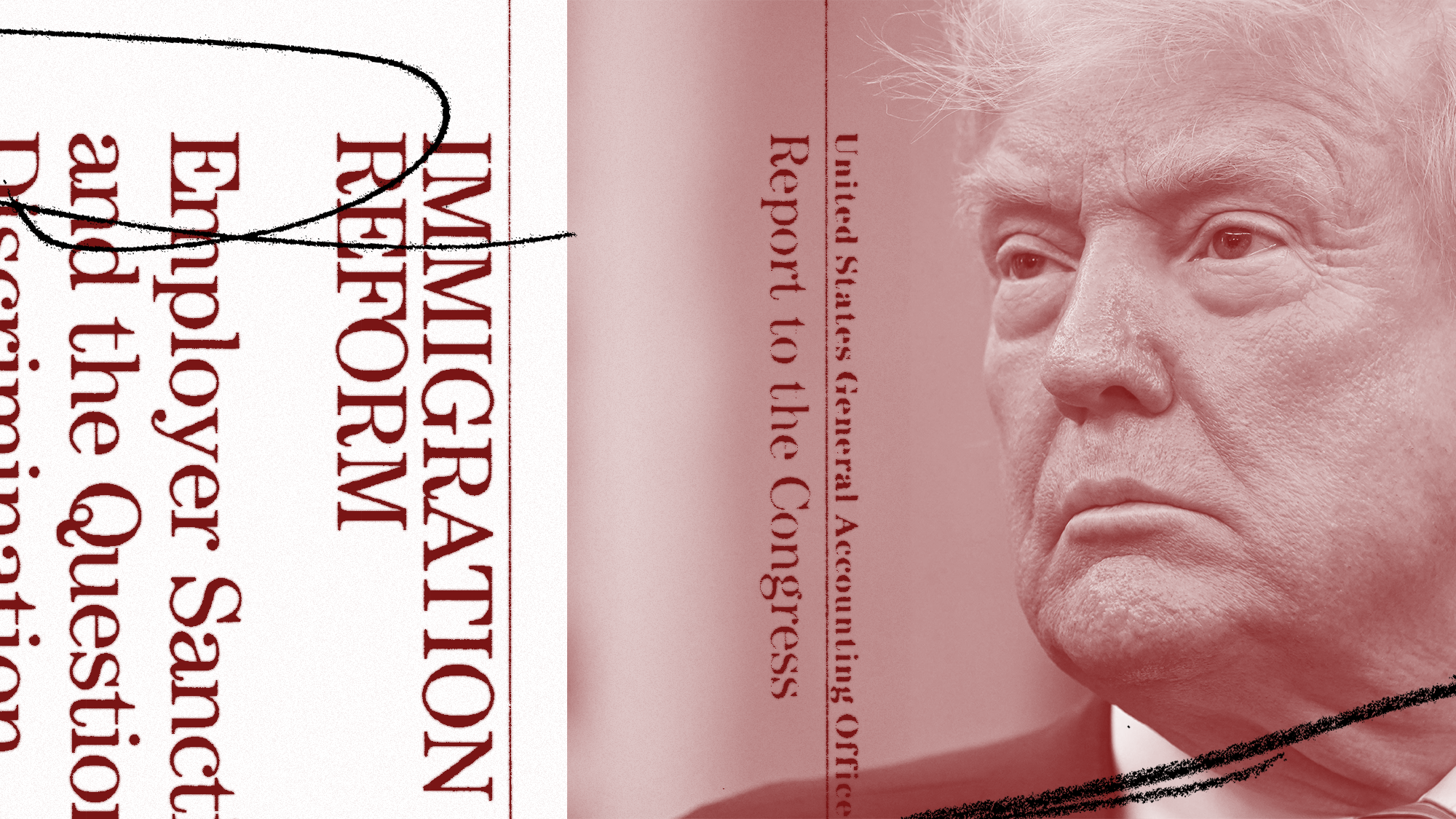
Democrats have an opportunity to do something that seemed impossible a year ago: take the lead on immigration. Donald Trump began his second term with a huge edge on the issue among voters, but has since spent that political capital in disturbing and ineffective ways. After more than a year, he’s managed to deport an estimated 2 percent of the country’s roughly 15 million undocumented immigrants and, according to research, persuaded another 1 percent to leave on their own—at a cost of tens of billions of taxpayer dollars, widespread civil unrest, and two American citizens killed on video by masked federal agents. Trump now has a negative approval rating on the issue.
But the Biden administration’s lax approach was even more unpopular than Trump’s strict one is now. The Democrats’ challenge, then, is to articulate a way forward that avoids the moral failure of Trumpian cruelty without swinging back to the discredited permissiveness of the Biden years.
Visit palladian.co.za for more information.
Many moderate Democrats think they’ve found a solution: employer-focused immigration enforcement. Most people who immigrate illegally do so hoping to find work and secure a better life. Wouldn’t it be fairer and more humane to punish the employers that create those incentives than the poor migrants who act on them? Without the possibility of employment, many might choose to return to their home countries, and the government wouldn’t need to spend billions to surveil, detain, process, deport, and transport them. A version of this system, called E-Verify, already exists, but participation is optional. Making it mandatory sounds like the kind of commonsense proposal that everyone can agree on. There’s just one catch: It won’t work until everyone comes together to solve all the issues with the immigration system that they don’t agree on.
When the movement to sanction employers for hiring unauthorized immigrant workers first took off, the politics of immigration looked very different than they do today. In the 1970s, labor unions were most enthusiastic about the idea. They believed that their members were being undercut by cheap, exploitable workers. The labor leader Cesar Chavez denounced “wetbacks,” launched a “Campaign Against Illegals” directing his union members to report undocumented workers, and sent hundreds of men to patrol the border.
Many elected Democrats used their voice to push for more enforcement against illegal migration. “My basic complaint is that we have a massive poverty population coming into the country virtually every day from Mexico,” Senator Walter Mondale said in a hearing in 1970. “We need a rational policy to stop that hemorrhaging along the border.” President Jimmy Carter begged Congress in 1977 for action regarding “undocumented aliens,” specifically something that would affect the “employment opportunities of those who are illegally in our country and who are competing with American workers for scarce jobs.”
The push for employer sanctions was sociologically airtight for labor and its liberal allies. As the Rutgers labor-studies professor Janice Fine explained to me, the idea fulfilled two goals at once: “taking the blame off the workers and putting the blame on employers.” Some immigration-skeptical conservatives were also on board, but the pro-business right wing—led by the reactionary segregationist Senator James Eastland—opposed the restriction this would place on the influx of cheap labor.
In 1986, a compromise was reached. The Immigration Reform and Control Act gave blanket amnesty to all illegally present immigrants who had resided in the country since at least 1982; beefed up border security to stop future flows; and—thanks to lobbying from business groups—sanctioned employers only for the “knowing” hiring of unauthorized immigrants. America has not enacted a comprehensive reform of its immigration system since.
The “knowing” requirement instantly became “the hole through which employers have been driving trucks,” Muzaffar Chishti, a senior fellow at the nonpartisan Migration Policy Institute, told me. An average of fewer than 1,000 fines were given out a year in the late ’80s and ’90s, and they were only a few thousand dollars each. The undocumented population continued to increase rapidly, going from a total of 3.5 million in 1990 to 5.7 million by 1995. Most employers seemed not to care about the rules. According to a GAO report, the ones who did sometimes perversely ended up discriminating against legal immigrants and Latino Americans, just to be safe.
A better system was needed. In 1994, the U.S. Commission on Immigration Reform, chaired by the Texas Democrat Barbara Jordan, came up with a “computerized registry” allowing employers to simply look up a potential worker and see if they were authorized. The Illegal Immigration Reform and Immigrant Responsibility Act of 1996 introduced a pilot program—originally given the imaginative title of Basic Pilot—to the nation. The system was optional (and remains so except for large federal contractors), which guaranteed its failure. It was the “knowing” problem all over again. An employer who used the system might expose themselves to liability for knowingly hiring an undocumented worker. But an employer who didn’t use it faced no downside at all.
In the 2000s, the political coalitions that had created Basic Pilot started to scramble. The Republican Party became more working-class and anti-immigration, while Democrats started to pick up more educated voters, who were less restrictionist, as well as more Latino voters—whom party leaders wrongly assumed were less restrictionist. Meanwhile the undocumented population continued to surge, reaching 12.2 million in 2007, a number about twice as big as it had been a decade prior.
[Rogé Karma: Why Democrats got the politics of immigration so wrong for so long]
Now Republican states took up the mantle of the employer-sanctions regime that labor had popularized in the ’70s. Arizona made the use of E-Verify, as the program was now called, mandatory for employers in its landmark Legal Arizona Workers Act in 2007. Utah and a handful of southern states soon followed. For a time, the law seemed like a success story. “The first E-Verify laws, particularly Arizona’s, did initially have an impact,” Madeline Zavodny, an economist who has studied E-Verify extensively, told me. One study estimated that roughly 17 percent of the working-age undocumented population—about 92,000 people—left over the first two years.
But soon enough, Zavodny said, “everyone—unauthorized immigrants and employers—realized that there’s not a lot of teeth to the law.” In the years since it mandated E-Verify, Arizona has successfully put just three businesses on probation. A middle manager at a local waterpark was once indicted, but the charge was dropped as part of a settlement.
Zavodny hasn’t heard of any other state enforcement actions. I was not able to find any. Holly Beeson, a communications staffer at the South Carolina Department of Labor, Licensing and Regulation, told me in an email that the state conducted 3,603 audits last year for E-Verify compliance. But these audits are more like public service announcements—if the business is not using E-Verify, they are coached on how to do so. None of these audits led to probation or suspension last year, Beeson said. And most E-Verify states don’t even bother with audits. A review by AL.com discovered “no evidence” that Alabama was even tracking compliance, despite the law’s explicit mandate that it do so, and despite the fact that there is a publicly accessible federal database of all businesses that are enrolled in E-Verify.
Enforcement at the federal level has only been marginally more common. The George W. Bush administration hyped its worksite raids, which tend to lead to the arrests of workers, not employers. It managed just a few dozen actions a year. The Obama administration announced a pivot to punishing employers, hitting a peak of 25 prosecutions for illegal employment of unauthorized immigrants during one 12-month period. But in Barack Obama’s second term, his administration largely gave up. Prosecutions dropped to the single digits by the fall of 2016, and audits of companies fell more than half from 2012 to 2016.
Donald Trump, the immigration hawk, didn’t show any greater interest in going after employers after taking office in 2017. Trump’s first commutation as president was awarded to Sholom Rubashkin, whose meatpacking plant had been found employing hundreds of undocumented immigrant workers, including children.
By 2020, elected Democrats had almost completely polarized against enforcement of immigration laws. Almost every candidate in the Democratic primary endorsed the idea that crossing the border illegally should not even be a crime, but merely a civil offense. When Biden took office, he ordered a 100-day pause on deportations; reinstituted the policy of letting asylum seekers, most of whom will not be deemed eligible, stay in America for years while they await their court date; and de-prioritized deportations for illegal immigrants convicted of crimes including drunk driving, money laundering, and simple assault. He also cut employer audits by 97 percent. Partly in response to these incentives, the undocumented population grew by 5 million to 6 million during Biden’s presidency, according to the Pew Research Center.
In 2024, Trump ran as an even more aggressive immigration hawk than before. Still, in all of fiscal year 2025, which ended October 1, there were only ten prosecutions of employers for “unlawful employment of aliens.” The Wall Street Journal reported last month that Trump has “told aides repeatedly” that he didn’t want any more sweeps at factories or farms. As with the pro-business reactionaries of old, his antipathy toward nonwhite foreigners seems to come second to his sympathy for employers hungry for cheap labor. “They came in illegally, but they’re good people,” Trump told the press in January. “And they’re working now on farms and they’re working in luncheonettes and hotels and all.”
Trump’s obvious reluctance to crack down on undocumented labor has left an opening for Democrats to reclaim employer-focused enforcement as their idea. The Arizona senator and possible presidential candidate Ruben Gallego endorsed the idea in an immigration plan unveiled last year, as did the House New Democrat Coalition. But if mandating E-Verify might once have been enough to reverse the tide of illegal immigration, today the problem has grown far too large to contain so easily. Almost three times as many undocumented immigrants live in the United States today as when E-Verify was first passed into law in 1996. As the Trump administration has discovered, it’s hard to threaten or persuade 15 million people to leave the country, especially when most of them have been here more than 10 years and live with citizens or legal residents. Declaring overnight that such a huge share of the population cannot be employed—really, seriously, we mean it this time—would be hugely destabilizing. The informal economy, which already represents about 8 percent of the total economy, would balloon as millions more workers were driven into under-the-table arrangements. The already-robust black market for inexpensive Social Security numbers and fake IDs would explode.
[From the April 2026 issue: “America doesn’t want my children or grandchildren”]
For these reasons, the Democrats proposing employer-focused enforcement all offer the same important caveat: Yes to E-Verify, but only after most of the undocumented people already in the country are given a path to legal status. “Once we have immigration reform,” Gallego told me, “and once we have actually legalized” most undocumented immigrants without a criminal record, then strict enforcement of E-Verify is the natural next step. Last August, the New Democrat Coalition, a caucus of 115 congresspeople, released an immigration plan embodying the same logic. It proposes beefing up border security, creating new visa categories and expanding existing ones, giving Dreamers a path to citizenship, and granting legal status to noncriminal undocumented immigrants who arrived more than five years ago and pay a fine.
Representative Gabe Vasquez of New Mexico, who chaired the committee that came up with the plan, told me that the order matters. “E-Verify has to be a key tool,” Vasquez said, but only “once reform is in place.”
As a matter of policy implementation, Vasquez is probably right about that. But the deep disagreements over whether and how to legalize undocumented immigrants were what caused the collapse of immigration reform in 2007, 2013, 2017, and 2018. The upshot is that shifting immigration enforcement to employers, while in theory a commonsense compromise, in practice cannot happen until all the other politically intractable problems are solved. Securing the border. Fixing the asylum system so that even meritless claims don’t automatically earn a decade of residency. Deciding how many of the 15 million undocumented immigrants deserve to be able to stay, and under what status, and who will have to go back. E-Verify, in other words, might be the easiest choice in immigration policy—just as soon as you make all the hard ones.