What government programs may be cut in Carney's spending review
· Toronto Sun
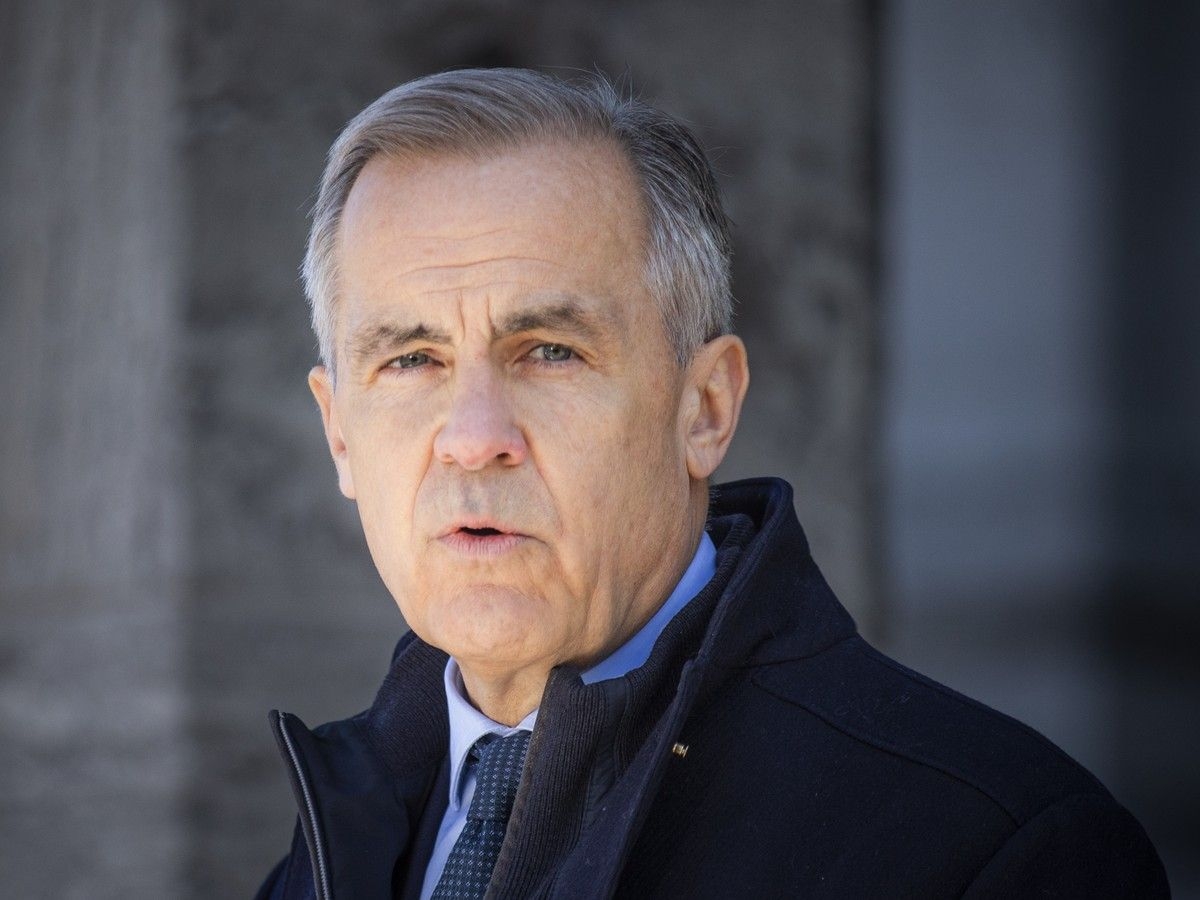
While the federal government has gradually released more information about its budget cuts, public sector unions have sounded the alarm over the impact those reductions could have on social programs.
Visit asg-reflektory.pl for more information.
With the release of departmental spending plans on March 13 came more details about what programs may be cut in Prime Minister Mark Carney’s spending review .
Departmental plans are not etched in stone, with funding decisions on programs that could change or renew in future years. Still, under Carney’s budget cuts, funding renewals may become less likely.
Here’s a breakdown of what the government is projecting to slash at some of the largest (and most consequential) departments.
Employment and Social Development Canada
At Employment and Social Development Canada (ESDC), one of the largest federal departments, several Justin Trudeau era social programs are set to “sunset,” the term for when temporary programs expire without being renewed, according to the departmental plans.
The department is responsible for administering much of the federal government’s employment and social programs, including Old Age Security and employment insurance.
ESDC’s departmental plan showed that funding for social finance organizations, skills training for Indigenous workers and learning supports for students facing barriers are all set to end and are not earmarked for renewal.
Other programs that were circled for spending cuts included the Future Skills program. The program — which provides support for workers when it comes to shifts in the labour market — saw a further $15 million cut then what was in last year’s departmental plan.
Canada Service Corps — a program that promotes civic engagement with Canadian youth from ages 12 to 30, with a focus on Indigenous and under-served youth — is set to be cut by $20 million.
Canada’s Apprenticeship Strategy, which provides grants to support apprenticeships in the trades, is also set for further cuts, dropping to $113 million in 2028-29. However, spending in the strategy was bookmarked for a $42 million increase in the 2026-27 fiscal year.
Budget 2025, did point to expanding the Union Training and Innovation within the strategy, which currently provides $25 million annually to union to purchase equipment and materials to train workers in red seal trades.
Global Affairs Canada
Carney’s cuts, which have been defended in service of increased defence spending, could have significant impacts for foreign aid.
For example, grants that support academic relations with other countries and exchange programs are facing a cut of $8 million over three years, according to the departmental plan for Global Affairs Canada.
Funding from the commonwealth youth program, which supports youth from 56 countries, will be cut to only $42,250 from $1.15 million.
The federal government’s contributions to the World Health Organization will drop by $3 million per year starting next fiscal, while funding for the Pan American Health Organization will drop by $2 million per year starting next fiscal.
Contributions to the Organization for Economic Co-operation and Development, or the OECD, which supports member organizations with solutions to economic and social problems, are also set to drop by $3 million per year, starting next fiscal.
Funding for International financial Institutions are also on the cutting room floor. Development banks in Africa, Asia and the Caribbean are facing tens of millions worth of cuts per year starting next fiscal.
Innovation, Science and Economic Development
Innovation, Science and Economic Development Canada (ISED) is responsible for improving conditions for investment and innovation in the Canadian economy.
It’s played a larger role recently, taking the lead on the artificial intelligence portfolio in the Canadian economy.
For example, ISED is set to scale back its involvement in the Horizon Europe program, a research initiative administered by the European Commission. Its funding for the program could drop to $18 million in 2028-29 from $63 million in 2027-28, among other cuts.
Health Canada
Budget 2025 outlined how Health Canada will cut underperforming or duplicative programs.
“Activities selected for reduction have consistently shown low demand, overlap with other jurisdictions or sectors, or provide minimal health benefits,” an annex section on Health Canada said.
One of those programs is the Oral Health Access Fund, which provides funding to help reduce or remove barriers to access dental care for Indigenous people, newcomers to Canada, people experiencing homelessness, remote communities and others.
In the departmental plans for 2025-26, the program was budget for $100 million in both 2026-27 and 2027-28 fiscal years.
Now, with the spending review, program funding starting next fiscal will drop to $33.9 million, and will continue to slide to $21.8 million the next fiscal, eventually reaching $9.75 million.
The Substance Use and Addictions Program will also continue to lose funding, according to Health Canada’s departmental plan. Under the plan, funding would be reduced to $36.5 million in 2028-29 from $122.1 million in 2026-27.
There is currently no funding set beyond 2027-28 for the Climate Change and Health Capacity Building Program, which supports communities adapt to the health risks of climate change.
Funding for the Mental Health Commission of Canada Contribution Program is also set to end after 2026-27 after its contribution agreement was extended by a year in January.
Around $500,000 for environmental health research is also set to sunset at the end of 2027-28 unless the program is renewed.
Related
Our website is your destination for up-to-the-minute news, so make sure to bookmark our homepage and sign up for our newsletters so we can keep you informed.